

By Acadia Advisory Group
How to Hire Foreign Expat Employees in Shanghai: Chinese Entity vs WFOE vs EOR
Three legal ways to hire foreign expat employees in Shanghai — through a Chinese entity, WFOE, or Employer of Record — including work permits, payroll, and compliance.
You have decided you need a foreign expat employee in Shanghai. The question is not whether to hire them, it is how to do it legally.
Hiring an expat in Shanghai requires the right legal entity, the correct work permits, a compliant employment structure, and payroll that applies local rules.
There are three main ways to legally employ a foreigner in Shanghai: through an established Chinese entity, through a WFOE company, or through an Employer of Record service provider. This article explains what each one involves and how to choose between them.
Acadia Advisory Group HR Services

Acadia provides comprehensive China HR services — employment contracts, payroll, individual income tax, visas and work permits, and Employer of Record (EOR) solutions for companies hiring in Shanghai without a local entity.
Learn about China HR servicesWhat expat hires expect
Expat packages vary considerably depending on whether the candidate is being relocated from overseas or hired locally in China. Expat relocation packages typically include housing allowances, school fees, home flights, and health insurance above statutory minimums. Locally hired foreigners often negotiate on gross salary rather than full expat terms. Both models are legitimate; the compliance obligations are the same either way.
What often catches foreign employers by surprise is that the real employment cost in China is materially higher than the agreed salary. Employer-side social insurance and housing fund contributions add roughly 30 to 35 percent on top of gross salary, depending on the city and contribution base. A foreign employee earning RMB 35,000 per month costs the employer closer to RMB 45,000 in total employment spend before any allowances, commissions, or overtime are added. Budgeting on gross salary alone is one of the most common planning errors in a first China hire.
The practicality of any hire depends on the company having a legal vehicle in China capable of sponsoring a work permit. That is the constraint everything else follows from.
What Foreign Expat Employees Need to Work Legally in China
A foreign national working in Shanghai — without exception — needs two things before they can start work: a Foreigner’s Work Permit and a Residence Permit.
The process, grounded in China’s unified work permit system, works in sequence:
Step 1: Notification Letter of Foreigner’s Work Permit
Before the employee travels to China on a work visa, the employer applies for a Notification Letter of Foreigner’s Work Permit. This is the employer’s application to hire a specific foreign national in a specific role. It requires company-side documentation as well as the employee’s credentials.
Step 2: Z-Visa or R-Visa
The employee uses the Notification Letter to apply for an employment visa at a Chinese embassy or consulate in their home country.
- Z-visa is the standard employment visa, used by foreign nationals employed by a company incorporated in China (domestic or foreign-invested).
- R-visa is issued to high-level foreign personnel and those with skills in shortage — typically Tier A talents under China’s tiered classification system. It comes with faster processing and simplified procedures.
The M-visa (business visa) cannot be used for employment. Using an M-visa for paid work activities is a compliance violation that creates risk for both the individual and the company.
Step 3: Foreigner’s Work Permit
After the employee enters China on the work visa, the employer applies for the Foreigner’s Work Permit. As of December 2024, the physical permit has been replaced by an electronic social security card integrated through a designated app, though the application process remains essentially unchanged.
Step 4: Residence Permit
Within 30 days of entering China, the hiring company must help the employee apply for a Residence Permit. This is the document that allows the employee to live and work in China legally. It is normally valid for up to one year, though Shanghai — along with Beijing — allows qualifying employees to apply for five-year residence permits under higher criteria.
Tiered classification matters
China classifies foreign workers into three tiers:
- Tier A — highly qualified top talents. Green channel processing, minimal restrictions on age or experience.
- Tier B — professional talents aligned with labor market demand. Standard process, subject to market tests.
- Tier C — other foreign workers in line with market demand. Subject to quotas and stricter controls.
Points are assigned based on education, salary level, age, work experience, past achievements, and Chinese language ability. The tier determines processing speed, permit duration, and practical ease.
Key rules for foreign employees specifically
- Once an employer changes, work permits and residence permits must be renewed. This is not optional and cannot be deferred.
- Foreign employees cannot be placed through labor dispatch or business outsourcing arrangements.
- Fixed-term contracts only — the maximum term is five years. Non-fixed-term contracts do not apply to foreign employees.
- Foreign employees who have been in China for 183 or more cumulative days in a tax year become resident taxpayers for IIT purposes, subject to progressive rates of 3—45%.
- Social insurance contributions are mandatory for foreign employees in China, though employees from 11 countries (including Germany, South Korea, Canada, Japan, and others) may be exempt under bilateral agreements.
Can a Foreign Company Hire Employees in China Without a Legal Entity?
Directly, no. A foreign company without a Chinese legal entity cannot legally employ staff in China under its own name, sponsor work permits, or run compliant payroll.
The work permit system requires a Chinese-registered employer — either a domestic company, a Foreign-Invested Enterprise (including a WFOE), or a licensed entity such as an Employer of Record provider — to sponsor the application. There is no mechanism for a foreign company registered only outside China to be the employer of record for a China-based employee.
This matters practically. Companies that try to bypass this — running payroll through a Hong Kong entity, paying employees as contractors, or using M-visa rather than Z-visa for long-term commercial roles — are creating exposure. That exposure includes immigration violations, IIT withholding failures, and the potential for permanent establishment risk in China for the offshore entity.
The practical answer is one of three structures: an existing Chinese entity, a newly formed WFOE, or an Employer of Record.
Option 1: Hiring Through a Chinese Entity (Domestic or JV)
If a foreign investor has already established a presence through a joint venture or has a Chinese partner with an incorporated entity, that entity can act as the employer. It has the legal standing to sponsor work permits, run compliant payroll, and enter into employment contracts.
How it works in practice
The Chinese entity applies for the Notification Letter, supports the visa process, issues a compliant labor contract, registers the employee with the social insurance and housing fund bureaus, and runs monthly payroll including IIT withholding.
Advantages
- Established legal standing; no new entity formation required
- Familiar to local authorities; fewer questions about legitimacy
- Can scale headcount without structural changes
Disadvantages
- The foreign investor is dependent on the Chinese partner’s willingness to act as employer
- Governance complications can arise when the foreign company’s management expectations conflict with the Chinese entity’s HR practices
- Joint venture arrangements may limit the foreign side’s control over employment terms, performance management, and termination decisions
- Not available if no Chinese entity exists
Best use case: Foreign companies with an established JV or Chinese partner entity that already has HR and payroll infrastructure in place.
Option 2: Hiring Through a WFOE
A Wholly Foreign-Owned Enterprise is a limited liability company established in Mainland China, wholly owned by foreign shareholders. It is the most common legal vehicle for foreign companies that want full operational control in China — including complete control over who they hire and how they manage them.
What a WFOE provides
A WFOE can sponsor work permits directly, issue employment contracts in its own name, run payroll, register employees with social insurance and housing fund bureaus, withhold and file IIT, and terminate employees following Chinese labor law requirements. It does not need a Chinese partner for any of this.
Setup considerations
Setting up a WFOE is a managed process, not a quick one. It involves name pre-approval, AMR registration, tax and chop setup, banking, and — where relevant — sector or customs licensing. Straightforward consulting or trading WFOEs can take several months from documents to operational status. Manufacturing or licensed sectors take longer.
The financial commitment is real. Registered capital requirements have become more flexible for many sectors under the 2023 Company Law, but the company needs working capital for rent deposits, staff costs, professional fees, and tax filings from day one. A company treating WFOE formation as a cost-minimization exercise typically underestimates both the setup overhead and the ongoing compliance burden it inherits — monthly payroll, quarterly tax filings, social insurance registrations, annual statutory audit, and license renewals begin the moment the entity is live.
During the setup period, the WFOE cannot sponsor work permits. This creates a timing gap for companies that need someone in China immediately.
Hiring foreign employees through a WFOE
Once the WFOE is operational, the hiring process follows the standard sequence: Notification Letter, visa, work permit, residence permit. The WFOE is the official employer. It bears the compliance obligations.
A practical constraint: local authorities review each foreign hire for necessity. There is no explicit regulation limiting the number of foreign employees a company can hire, but authorities assess applications on a case-by-case basis considering the company’s business scope, size, registered capital, and organizational structure. A newly incorporated WFOE with limited business history and a request to hire several senior foreign nationals will face scrutiny.
Advantages
- Full foreign control of employment terms, compensation, and management
- No dependence on a Chinese partner or third-party provider
- The entity can also hire Chinese nationals, run mixed teams, and operate commercially
- Stronger long-term platform for growing a China operation
Disadvantages
- Several months to set up from scratch — not viable for urgent hiring
- Full ongoing compliance burden: monthly payroll, tax filings, social insurance, annual audit, license renewals
- Administrative cost and management attention
- Capital investment required
Best use case: Companies with a confirmed China strategy, ready to build a real operating entity, with a timeline that accommodates WFOE formation.
Option 3: Hiring Through an Employer of Record (EOR)
An Employer of Record is a Chinese-registered company that acts as the legal employer on behalf of a foreign client. The EOR signs the labor contract, sponsors the work permit, runs payroll, manages social insurance, and handles ongoing compliance. The client company manages the employee’s work, direction, and daily responsibilities.
This is not an informal arrangement. A properly structured Shanghai EOR has the legal standing to employ in China and is distinct from undocumented arrangements where a foreign company pays a contractor through an overseas account.
How it works for foreign employees
The EOR’s China entity applies for the Notification Letter of Foreigner’s Work Permit in the employee’s name. The employee enters on a Z-visa referencing the EOR as the employer. The work permit and residence permit are issued in the EOR’s name. Payroll is processed by the EOR, including correct IIT withholding under the resident or non-resident taxpayer rules, social insurance registration, and housing fund contributions where applicable.
The client company directs the work. The EOR handles the administrative and legal employer responsibilities.
Payroll and benefits
The EOR calculates and processes salary, employer and employee social insurance contributions, housing fund, IIT, and any statutory leave obligations. Shanghai-specific rules — including the city’s maternity allowance calculations and its treatment of overtime for non-fixed working hour employees — are applied by the EOR rather than the client.
For expatriate packages, the EOR can typically manage housing allowances, annual flight allowances, and health insurance supplements alongside standard payroll, though the specific benefits package is agreed between the client and employee.
Compliance management
The EOR maintains the employment records, files monthly payroll taxes, tracks permit expiry dates, and manages renewal processes. When employment ends, the EOR handles the deregistration of the work permit and residence permit within the required ten-day window.
Advantages
- No WFOE formation required — employees can be hired in weeks rather than months
- No ongoing entity maintenance costs (annual audit, license renewals, AMR filings)
- Local compliance managed by specialists
- Flexibility to scale up or down without structural changes
- Practical for market testing before committing to a WFOE
Disadvantages
- The EOR is the legal employer — the client company does not appear on the employment contract
- Work permits are issued in the EOR’s name; if the client later forms a WFOE, permits must be transferred
- Some candidates — especially senior executives — prefer to see the actual employing entity on their contract and may ask questions
- EOR is not a substitute for a long-term operating structure if the business becomes substantial
Best use case: Companies entering Shanghai without a China entity, testing the market with one or two hires, hiring before a WFOE is ready, or maintaining a small team without the overhead of a full legal entity.
Comparing the Three Models
| Factor | Chinese Entity | WFOE | Employer of Record |
|---|---|---|---|
| Legal employer | Chinese entity (JV or domestic) | The WFOE | EOR’s China entity |
| Time to first hire | Fast (entity exists) | Several months (setup first) | Weeks |
| Work permit sponsorship | Yes | Yes | Yes (in EOR’s name) |
| Foreign control | Shared (JV) or limited | Full | Full (day-to-day); EOR is formal employer |
| Setup cost | Low (entity already exists) | Medium—high | Low—medium (service fees) |
| Ongoing compliance burden | Shared with JV partner or existing structure | Full — borne by WFOE | Managed by EOR |
| Scalability | Depends on JV terms | High | Moderate (per-employee cost scales) |
| Flexibility | Limited by JV governance | High | High |
| Best for | Existing JV/partner relationship | Long-term China operation | Market entry, pre-WFOE hiring, small teams |
Common Mistakes When Hiring Expat Employees in Shanghai
Hiring before permits are approved
This is the most common and most expensive mistake. The employee starts work. Onboarding is done. Then someone notices the work permit application hasn’t been filed, or was filed but hasn’t been approved yet. The employee has been working without legal authorization. The company is exposed. Reversing this is administratively painful and creates unnecessary tension with local authorities.
Work begins after the Foreigner’s Work Permit is in hand. Not before.
Using the wrong visa
An employee entering on a business M-visa and conducting employment activities is non-compliant. Z-visa is required for employment. The distinction between “attending meetings” and “performing work” is not always sharp, but if the employee is regularly in China performing their job, the correct visa is Z.
Missing the residence permit deadline
The residence permit application must be filed within 30 days of entering China. Missing this deadline creates an irregular status for the employee and a compliance problem for the employer. This is an administrative deadline, not a soft guideline.
Not deregistering when employment ends
When a foreign employee’s employment ends, the employer has ten days to deregister the work permit. Missing this creates ongoing obligations and complicates the employee’s status for any future work in China.
Ignoring the IIT residency clock
A foreign employee who accumulates 183 or more days in China in a tax year becomes a resident taxpayer. After six consecutive years of meeting that threshold, they become liable for IIT on worldwide income. Companies with long-term foreign employees in Shanghai should be tracking this. The six-year count can be reset by spending fewer than 183 days in China in any tax year, or by a single departure of more than 30 consecutive days.
Assuming global HR policies apply
They don’t. Shanghai has specific overtime rules, maternity allowance calculations, housing fund treatment, and statutory leave requirements that differ from other cities. A global HR policy not adapted to Shanghai will eventually produce a compliance gap.
When Does an Employer of Record Make the Most Sense?
Most of the interesting EOR use cases are not permanent solutions. They are staging posts — the right answer for a specific phase of a company’s China entry.
Hiring a country manager before the WFOE is ready
A company has decided to enter China. The WFOE process is underway. It takes several months. The right country manager candidate has been found, and they need to start. An EOR allows the hire to proceed now, compliantly, with permits in the EOR’s name. When the WFOE is incorporated and operational, the employment relationship transfers.
Testing the market with one or two commercial hires
A regional business wants to know whether Shanghai is worth a full legal entity. It hires a business development manager through an EOR to develop relationships and assess real commercial opportunities. If the market validates, a WFOE follows. If not, the EOR structure winds down cleanly.
A project-based or fixed-term engagement
A company has a specific twelve-month project in Shanghai. It needs a technical expert on the ground. Setting up a WFOE for a single fixed-term project is disproportionate. An EOR provides a clean, compliant solution for the project duration.
Maintaining presence after scaling down
A company reduces its China footprint but wants to keep one or two people in Shanghai rather than exiting entirely. Maintaining a full WFOE for two employees is expensive. An EOR provides a lower-cost structure for a reduced team.
The point of transition
EOR is not where most companies want to stay long-term if their China business is growing. The legal employer on the permit is the EOR, not the client. Senior employees notice this. The structure does not allow the client to issue VAT invoices or operate commercially in its own name.
For companies ready to commit to China with a real operating platform, a WFOE is the long-term answer. Set it up properly. Plan the timeline. Do not try to hire before it is ready.
For companies in the middle — testing the market, moving quickly, bridging the WFOE gap, or keeping a small team running without the overhead of a full legal entity — an Employer of Record provides a compliant, practical solution. Not permanent. Practical.
The permit requirements, IIT rules, social insurance obligations, and employment law framework are the same regardless of which entity holds the employment relationship. The difference between structures is in who manages that compliance and what operational control and scalability you get in return.
If you are planning your first Shanghai hire or evaluating your current employment structure, speak with a China employment specialist before making decisions. The permit sequence is manageable. The compliance requirements are specific. Getting the structure right at the start is considerably easier than fixing it later.
Sources
- Exit and Entry Administration Law of the PRC (2012), Article 41: foreigners working in China must obtain a work permit and work-type residence permit. Full text: http://www.npc.gov.cn/npc/c2/c12435/201905/t20190522_86959.html
- Regulations on the Entry and Exit of Foreigners, Article 6: visa categories include the M-visa (commercial trade activities) and Z-visa (employment). National Immigration Administration: https://www.nia.gov.cn/n741440/n741547/c1014161/content.html
- Ministry of Human Resources and Social Security, 2024 Annual Work Summary (December 2024): foreign work permit information integrated into the social security card ("Join in Card") from December 2024. https://chinajob.mohrss.gov.cn/c/2024-12-30/421848.shtml
- Exit and Entry Administration Law of the PRC (2012), Article 29: foreigners who need to obtain a residence permit shall apply to the public security organ within 30 days of entry. Full text: http://www.npc.gov.cn/npc/c2/c12435/201905/t20190522_86959.html
- Ministry of Human Resources and Social Security / State Administration of Foreign Experts Affairs: the three-tier classification framework (Tier A high-end talents, Tier B professional talents, Tier C other foreign workers) is applied under the national foreign talent introduction system, with point-based scoring on education, salary, age, and experience. MOHRSS China Human Resources Market Network: https://chrm.mohrss.gov.cn
- Provisions on the Administration of Employment of Foreigners in China (promulgated 1996, last amended 2017): Article 17 (five-year maximum contract term); Article 22 (work permit renewal required on employer change); Article 25 (prohibition on labor dispatch arrangements for foreign employees); relevant provisions on 10-day deregistration obligation on termination. Full text via State Council portal: https://www.gov.cn/zhengce/2022-08/31/content_5711314.htm
- Individual Income Tax Law of the PRC (2018 amendment), Article 1: individuals without domicile in China who reside in China for a cumulative 183 or more days in a tax year are resident individuals subject to IIT at progressive rates of 3%–45%. Full text: https://fgk.chinatax.gov.cn/zcfgk/c100009/c5193028/content.html. MOF/SAT Announcement 2019 No. 34 on residency determination standards for non-domiciled individuals: the six-year worldwide income rule and the 30-day single departure reset: https://fgk.chinatax.gov.cn/zcfgk/c102416/c5202334/content.html
- Interim Measures on Social Insurance for Foreigners Employed in China (MOHRSS Order No. 16, 2011, amended December 2024), Article 3: foreigners employed by registered entities in China shall participate in the five statutory insurance schemes; Article 4: nationals of countries with bilateral social insurance agreements with China may handle contributions in accordance with those agreements. Text of the 2024 amended version: http://hrss.lasa.gov.cn/rsj/wjzl/202412/05250c4b53ee4daa92e193588a56d5ca.shtml
- Shanghai MOHRSS employer social insurance contribution rates 2025: pension 16%, medical (incl. maternity) 10%, unemployment 0.5%, work-related injury 0.2%–1.9% by industry (8-tier scale effective January 1, 2025): https://rsj.sh.gov.cn/tzcjd_17352_17352/20250103/t0035_1429760.html; Shanghai housing provident fund employer rate 7%: https://rsj.sh.gov.cn/tmsztc_17502/20240416/t0035_1423583.html
- Company Law of the PRC (2023 revision): amended registered capital contribution period rules, effective July 1, 2024. SAMR publication: https://www.samr.gov.cn/zw/zfxxgk/fdzdgknr/fgs/art/2023/art_067c072db6ef4679a2e0180996be4cf8.html
Related articles
More guides for expats in Shanghai.

Acadia Advisory Group
How to Set Up a WFOE in Shanghai: A Practical Step-by-Step Guide
A practical walkthrough of every step involved in setting up a wholly foreign-owned enterprise (WFOE) in Shanghai — from pre-registration decisions to post-licensing compliance.

Vivian Zhao
Shanghai Expat Living Expenses & Cost Considerations
A planning guide to the cost categories expats and companies must budget for in Shanghai — housing, education, healthcare, transportation, visas, tax, and social insurance.
Vivian Zhao
Shanghai Expat Relocation Packages – Whats your worth in Shanghai ?
A look at how expat employment packages in Shanghai have changed - from full relocation deals to half-pat lump sums, school packages, and what companies offer today.

Vivian Zhao
China Maternity Insurance for Couples Having a Baby in Shanghai
A practical guide to pregnancy insurance in Shanghai - delivery costs, waiting periods, congenital conditions, newborn care, complications coverage, and what to ask before you buy.

Vivian Zhao
Renting Old Shanghai Homes, Finding the Charms
A personal account of hunting for a longtang lane house in Shanghai — renovation pitfalls, nightsoil trucks, rental permits, and longtang worth exploring.
Vivian Zhao
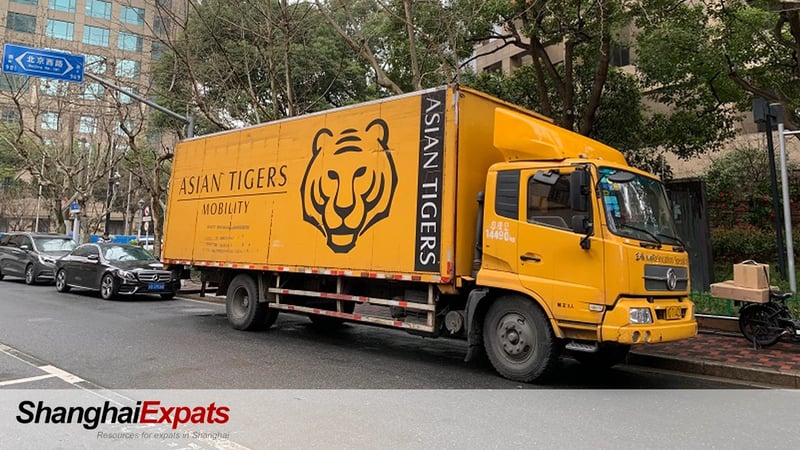
Asian Tigers: International Moving and Relocation in China
Asian Tigers China - door-to-door household moves, relocation services, shared container shipping, and secure storage for expats in Shanghai and across China since 1988.
Related forum discussions
Hiring in Shanghai: Native English Game Localization / AI Translation Evaluator (RMB 15k–25k/month)
Jiaxing Xie 0 replies 11 Aug 2026
🏡 Maker Looking for a Reduced-Rent Home in Shanghai Home & Pet Care + Tech Help in Exchange for Lower Rent
LIN LI 0 replies 24 Aug 2026